Back pain, especially lower back pain, is more common than you think. It is a common cause of disability around the world.
The spinal column is the main support structure of our bodies. It is a stable yet flexible structure allowing our bodies to stand upright while moving.
The back is formed of bones, joints, tendons, ligaments, muscles, and nerves. These structures work together to provide your core and entire body with the proper support, flexibility, and strength the body needs.
Back pain can result from underlying conditions in muscles, ligaments, tendons, discs, or any other structure. It can originate from the lower, middle, or upper back. It is usually a chronic problem developing with age but can also be an acute condition arising from motor vehicle accidents, sports injuries, and more. (1)
What Structures Make Up the Back?
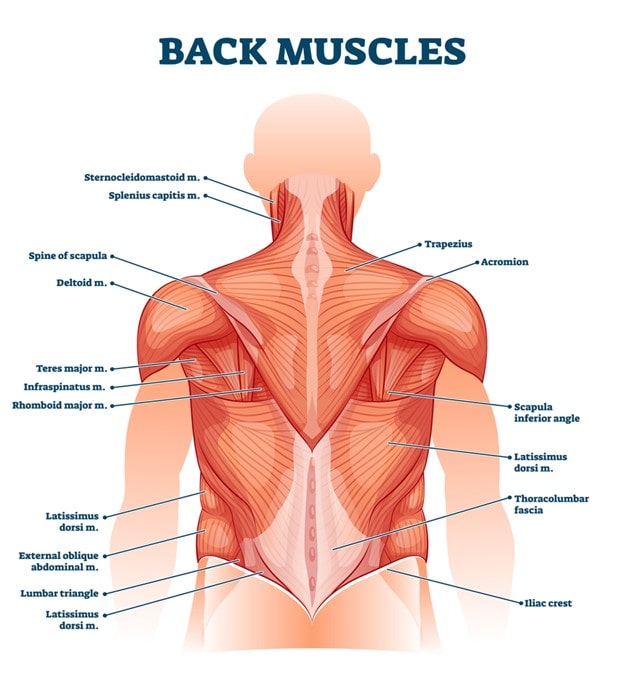
Back Muscles
The back forms the posterior part of the body's trunk extending from the neck to the pelvis. The spinal column or the spine, located at the center of the back, supports the upper half of the body while protecting the spinal cord extending inside it.
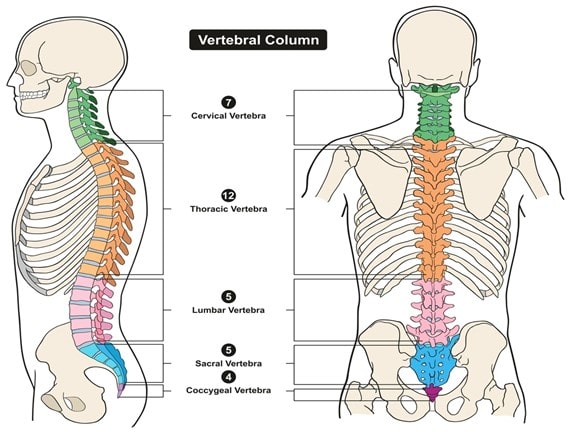
The spine is formed of 33 bones called the vertebrae. The vertebrae create a channel inside the spine because each one of them has a roundish hole. This channel is where the spinal cord is located, extending from the skull base to below the chest. Nerves come out of the spinal cord via small spaces between the vertebrae at the side of the spine.
An intervertebral disc occupies the space between every two vertebrae. It is a cartilaginous pad allowing the vertebral column to remain flexible during the movement of the body and acts as a cushion between the bones.
Ligaments and tendons keep the vertebrae in place and attach the spine to the back muscles.
The spine can be divided into four regions starting from the base of the skull:
Cervical (C1 to C7): The seven cervical vertebrae are located in the neck.
Thoracic (T1 to T12): The twelve thoracic vertebrae forming the upper back and are located in the chest area.
Lumbar (L1 to L5): The five lumbar vertebrae forming the lower back or the lumbar region. The lumbar region is where lower back pain is felt. (2)
The sacrum and coccyx: Small vertebrae fused at the end of the spinal column.
Regions of the Vertebral Column
Back Pain Causes
Muscle strain in the back is one of the most common causes of back pain. When a problem occurs with any region of the back, back pain occurs. In some cases, the cause of back pain may not be clear. Some of the more common back pain causes include:
1. Muscle Strain
Back pain usually occurs due to strain, injuries, or tension. Strains can occur to muscles or ligaments. Also, muscle spasm in the back is common, especially among people who sit for long hours.
In addition, damaged disks, falls, fractures, and injuries can cause muscle strain and back pain.
The most common activities that lead to muscle strain, tension, or spasm include:
Lifting heavy items.
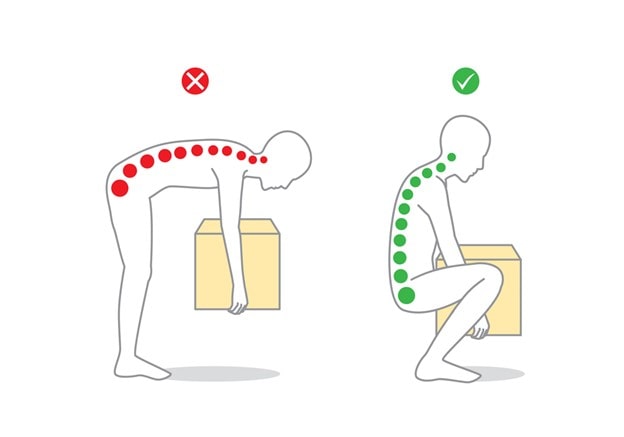
Lifting improperly.
Making sudden, awkward movements, especially during sports or in an accident. (3)
2. Damages to Back Structures
Back pain can be associated with damages to specific structures in the back. Here are the most common structural damages leading to back pain:
Ruptured Discs: All the vertebrae are cushioned with discs. When a rupture occurs to the disc, it puts pressure on the nerves, which leads to severe back pain. (4, 5)
Bulging Discs: Bulging discs have the same mechanism as ruptured discs. They put pressure on the nerves leading to back pain. (6)
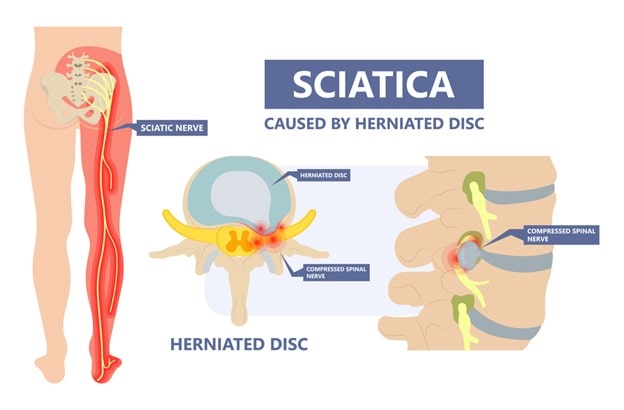
Sciatica: In some cases, a herniated or bulging disc can press on a specific nerve leading to severe, sharp pain traveling through the back, buttock, and then back of the legs. (7, 8)
Sciatica
Arthritis: When osteoarthritis affects the joints in the lower back, hips, or other joints in this area, it may narrow the spinal cord. The condition is called spinal stenosis. (9, 10, 11)
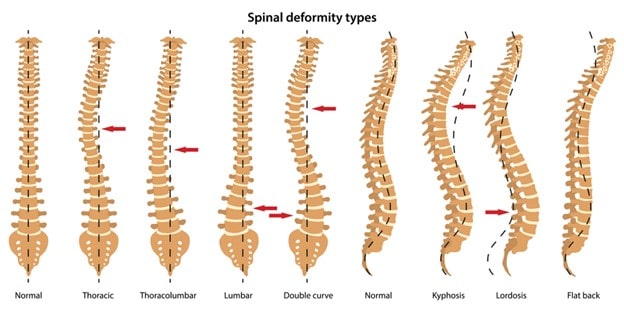
Problems with the Curvature of the Spine: If the curvature of the spine is abnormal, it may lead to back pain. For example, the spine may curve to one side. This condition is scoliosis. (12, 13)
Spinal Deformity Types
Osteoporosis: Osteoporosis makes the bones brittle and porous, which may lead to compression fractures in the vertebrae of the spine. (14, 15)
Kidney Problems: Middle and lower left back pain and middle and lower right back pain can result from kidney problems such as kidney stones and kidney infection. (16, 17, 18)
3. Movement and Posture
People sitting for a long time, such as those working in front of their computers, usually suffer from back and shoulder problems over time.
Daily activities and poor posture can lead to back pain, including:
Twisting.
Bending improperly for a long time.
Lifting, carrying heavy items, pulling, and pushing.
Over-stretching.
Activities that involve sudden movements which may result in back spasms.
Putting too much strain on the neck, especially when driving or using a computer for a long time.
Sleeping in an appropriate position without a mattress that supports the body and keeps the spine in a straight position. (19, 20, 21, 22)
4. Other Causes
Certain medical conditions are associated with back pain, including:
Cauda Equina Syndrome: The cauda equine is a collection or a bundle of spinal nerve roots in the lower end of the spinal cord. Cauda equina syndrome symptoms include lower back pain, upper buttocks pain, and numbness in the genitalia and thighs. In some cases, it's associated with bladder and bowel problems. (23, 24, 25)
Spine Cancers: Spinal tumors can put pressure on spinal nerves leading to severe back pain. (26, 27)
Spinal Infections: Spinal infections can make the back warm and tender. It is usually associated with fever and chills. (28)
Other Infections: Kidney and bladders problems, in addition to pelvic inflammatory disease, can cause back pain, especially if the condition is chronic. (29, 30)
Sleep Problems: People with sleep problems such as insomnia usually have back pain. (31, 32)
Shingles: It is a neurological infection affecting nerves. If it impacts spinal nerves, it will lead to back pain. (33)
Back Pain Risk Factors
Back pain can occur to anyone, even teenagers and children. Here are the most common risk factors associated with back pain.
Age: Back pain, significantly lower back pain, is common among older adults, usually starting in their 30 or 40's.
Sedentary Lifestyle: Obesity puts a lot of weight on the back. It is one of the common causes of lower back pain. In addition, lack of exercise can make the back muscles week, which leads to back pain.
Diseases: Arthritis, especially osteoarthritis, and certain types of cancers are associated with back pain.
Lifting: Lifting improperly or heavy items can put a lot of pressure on the back muscles.
Psychological Problems: Depression and anxiety are usually associated with back pain.
Smoking: Smoking increases coughing, which may cause herniated and bulging disks. Also, it decreases the spine blood flow, which increases the risk of bone problems such as osteoporosis. (34, 35, 36)
Our experienced Boston back pain doctor will be able to diagnose your underlying back condition fully.
Back Pain Symptoms
Back pain usually starts acutely then turns into chronic pain. If it is appropriately managed at the early stages, the symptoms will be limited significantly. (37, 38)
Our Boston back pain Doctor identifies the symptoms based on the patient's pain descriptions and accurately diagnoses the condition before setting the treatment plan.
The most common symptoms of back pain include:
Dull, Aching Pain: When the pain remains for a while, the patient describes it as dull, aching. It is not sharp or burning. It is usually associated with muscle spasms and the inability to move correctly.
Pain Affecting the Legs, Feet, and Buttocks: In some cases, back pain is described as sharp, tingling, or burning. This kind of pain usually travels to the buttocks and legs and is associated more with lower back pain due to the irritation of the sciatic nerve. If the patient describes the pain as "lower back pain right side" or "lower back pain left side," it is probably sciatica.
Pain Worsens After Sitting for a Long Time: Sitting for a prolonged time can pressure the intervertebral discs, which may make back pain worse, especially lower back pain. When the patient walks or changes the position, the pain is usually relieved. However, once the patient sits again, it returns.
Pain Is Relieved When the Patient Changes Positions: According to the cause of back pain, certain positions can be more comfortable. For example, If the patient has spinal stenosis, leaning forward may relieve the pain while walking can increase it. In our Boston back pain clinic, we ask the patient what positions increase or decrease the pain to identify the pain source.
Pain is the Worst in the Early Morning and Improves with Movement: Some patients who experience back pain, especially lower back pain, describe it as painful when they first wake up in the morning. However, when they start moving around, the pain is usually relieved. This pain happens due to stiffness. After sleeping, the blood flow to the spine decreases and, in turn, leads to back pain.
Our Boston back pain management doctor will show patients how to best sleep with lower back pain using the proper mattresses and pillows.
The Onset of Back Pain Symptoms
The onset of back pain symptoms can vary with time and includes:
Pain Developing Slowly: Back pain symptoms associated with frequent movement and positions that put a lot of stress on your back usually develop over time. The patient usually notices the pain while performing certain activities or after a long day of work.
Pain Is Not Constant but Worsens Over Time: When the underlying cause is a degenerative disc, the back pain usually comes and goes but worsens over time.
Immediate Back Pain: Sudden, sharp back pain is caused by damages to the spine and its muscles. It is usually associated with severe injuries, such as in a catastrophic Boston motor vehicle accident. Refer to our pages on Boston Whiplash and Boston Motor Vehicle Accident conditions for more information.
Delayed Back Pain Symptoms: If the symptoms take days or hours to develop after an injury, you should continue to monitor your symptoms. Additionally, you should seek medical advice from our Boston back pain doctor after injuries or accidents to assess the condition and take immediate actions before the pain worsens.
Back Pain Warning Symptoms
In some cases, back pain may be indicative of a more serious underlying problem. If you feel any of the following symptoms and back pain, you should immediately visit our Boston back pain clinic.
Loss of bladder or bowel control.
Weight loss without any changes in your lifestyle.
Chills and fever.
Abdominal pain with no apparent cause after injuries.
Radiating pain, numbness, tingling sensation, or weakness in the arms, legs, genitalia, buttocks, or anus.
Back Pain Diagnosis
The most important step to treat back pain properly is to diagnose the underlying condition accurately. Our Boston back pain specialist may follow the approach outlined below to diagnose your back condition appropriately.
1. Collecting a Detailed History
The patient should provide the doctor with all related information regarding their symptoms and medical history, including:
Back Pain Symptoms
The doctor will ask the patient-specific questions such as:
Can you describe the pain? Is it sharp or dull? Where do you feel it?
Where is the pain exactly?
When do you feel the pain? Is it associated with certain activities or positions?
When is the pain better? What are the activities or positions that relieve the pain?
What are the other symptoms you are feeling?
The Patient's Activity Level
Are you an active person? Or is your lifestyle sedentary?
Do you exercise? How often?
Symptoms may be affected by your level of activity. For example, people who sit for more extended periods usually suffer from lower back pain.
Sleeping
Do youget enough sleep?
What is your favorite sleep position?
Do you use high-quality mattresses and pillows while sleeping?
Posture
How do you sit? Do you sit upright or slouch?
How do you like to sit? Do you feel comfortable or not while sitting?
Injuries
Did you have any recent injuries or accidents?
Did you suffer from any injuries in the past that may cause back pain?
At our Boston back pain clinic, we gather all the necessary information about our patients' medical history and keep them for future visits. A detailed medical history is one of the most important steps in determining the proper diagnosis.
2. Physical Examination
Physical examination is the second step after gathering medical history to narrow down the possible causes of back pain.
Palpation
Your doctor will feel your back using his hands to determine the location of muscle spasm, tenderness, and tension.
Neurologic Examination
Neurological exams involve moving the hip, knees, legs, and toes. The sensory examination will determine your reaction to light, a pinprick, and examining the sensation of the back, buttocks, and legs.
Range of Motion
Your doctor will ask you to bend, twist, and lift in certain positions. This examination aims to determine which positions and movements make the pain worse or better.
Reflexes
The patient's reflexes will be checked to assess what muscles are weak. If an issue is identified with the patient's reflexes, the problem may be due to a nerve-related condition.
Raising Legs
The patient may be asked to raise each leg individually as high as possible. If back pain is sharp during this movement, the problem may be due to a herniated disc.
Our Boston back pain physician will examine you in every possible way to determine the underlying cause.
3. Diagnostic Imaging and Additional Tests
Diagnostic imaging tests are needed to collect more information about the causes of back pain. (39, 40, 41, 42, 43, 44, 45). The most common imaging tests are:
X-rays: They are used to assess the condition of your bones. They show if there are any abnormalities, including fractures, arthritis, or tumors.
CT Scan: It shows details that are not seen in an x-ray.
MRI Scan: It shows the details of spinal structures, including soft tissues such as ligaments, tendons, muscles, joint problems, and intervertebral discs.
Injections: Directed injections are used to determine the source of pain. They are also used during surgeries and rehabilitation as a treatment method.
Bone Scans: They can determine cancers and compression problems, including if caused by osteoporosis. If there is a bone problem, a bone scan will detect it.
EMG: EMG is necessary to determine if there is a problem with nerves. It is done if your doctor suspects a nerve compression due to a herniated disc or spinal stenosis.
A Blood Test: If there is an infection, a blood test will be ordered to determine the type of infection.
Early Treatments for Lower Back Pain
Our Boston back pain management plan varies from a patient to another according to the patient's needs and underlying condition. According to the diagnosis, certain treatments are more effective than others. A treatment plan may include the following:
Self-Care for Back Pain
Mild to moderate back pain conditions can be treated by home remedies and self-care. They involve certain methods, including:
Rest: Back pain episodes can be improved by avoiding heavy activities. Take short periods of rest since prolonged rest periods could make the pain worse.
Modifying Activities: Any activity that aggravates the pain should be avoided. For example, prolonged sitting is not recommended for people who suffer from lower back pain. You should stay active, but certain activities must be avoided.
Heat and Ice: Applying heat such as getting a warm bath or applying a hot water bottle can relax muscle spasms and tensions and improve blood flow, which is essential to help the back muscles heal faster. If the back muscles are inflamed, applying ice or cold packs can reduce swelling and relieve inflammations. (46) When you start to return to your normal lifestyle, alternating ice and heat can be helpful for better flexibility and increasing your range of motion.
Over-the-Counter Pain Medications: Over-the-counter medications such as aspirin and ibuprofen are anti-inflammatory medications that can reduce pain and swelling. If you take other medications or have certain underlying health conditions, you should talk to your doctor first before taking any other medicines.
Exercises for Back Pain
Physical therapy is an essential part of our Boston back pain management. Certain types of exercises can promote rehabilitation, including:
Stretching:Stretches, especially stretches for lower back pain, help patients with their muscle flexibility and strength. The back, buttock, and leg muscles support the upper half of the body. The more flexible these muscles are, the more back pain relief a patient may experience. Holding stretches for 20 to 30 seconds in each position is recommended.
Strengthening Exercises: Making your back, abdominal, hip, and leg muscles stronger will help better support your spine and core. Stronger muscles relieve back pain. At our Boston back pain clinic, we generally will refer patients to physical therapy or chiropractic care to help develop an effective strength training program for better spine support.
Low-Impact Aerobics: Low-impact aerobics enhance the blood flow to the spine, stimulating the healing process, especially after injuries. Low-impact injuries such as walking, water therapy, and step machines are recommended for back pain episodes. They keep people active and functional, along with increasing the range of motion and flexibility.
Medical Treatments for Back Pain
The main goal of these treatments is to relieve pain. However, these treatments may not treat the underlying cause. Your Boston back injury doctor will prescribe these treatment options along with a physical therapy program to improve the condition. Here are the most common medical treatments used for back pain:
Muscle Relaxants: These medications inhibit the CNS and increase the mobility of tense muscles. Generally, this will result in relief for pain due to muscle spasms or tension. If the condition is chronic, muscle relaxants may not be recommended. (47)
Narcotic Medications: Narcotics make the pain signals reaching the brain weak. They are usually used for intense, sharp pain, such as pain after injuries. They must be taken under the complete supervision of your doctor. (48)
Back Braces: Back braces are used to provide support for the back muscles resulting in more comfort and less pain. Back braces and physical therapy make the healing process faster. It is highly recommended to wear a back brace after back surgeries. (49, 50)
Epidural Steroid Injections (ESI): A dural sac surrounds the spinal cord. These injections contain steroids and, when given directly into the dural sac, help relieve the pain temporarily and reduce inflammations. It is usually combined with physical therapy to address the underlying condition better. Platelet-Rich Plasma (PRP) may be used in place of steroids depending on your underlying health conditions. (51, 52, 53)
Antidepressants: If the pain is due to depression or anxiety, the doctor will prescribe an antidepressant for chronic back pain and refer the case to a psychiatrist. (54, 55)
Alternative Treatments for Back Pain
Non-medial treatments or alternative treatments can relieve back pain under the supervision of the physical therapist (56, 57, 58, 59) or chiropractor. The most common alternative treatments are:
Manual Manipulation: A healthcare provider or a chiropractor can help improve mobility and reduce stiffness and pain. They use many methods, including manual manipulation, to relieve back pain, especially lower back pain in some cases.
Acupuncture: Acupuncture stimulates certain areas of the body to decrease the pain by carefully placing needles.
Massage Therapy: Massages increase the blood flow to the back, enhancing the healing process and relieving muscle spasms.
Mindful Meditation: Meditation reduces the patient's perception of the pain, especially if it is associated with psychological problems such as anxiety and depression. Deep breathing techniques, altered focus approaches, and other methods of meditations are used to relieve the pain.
Surgeries for Back Pain
If your back pain is not relieved after conservative treatment measures, a doctor may recommend surgery as a solution. At our Boston back pain center, we discuss all the options with our patients and help them to make the best decision for their conditions. The following are examples of surgical options that may be available to you:
Decompression Surgeries
A decompression surgery aims to remove the pressure from the spinal nerve root. For example, the part of the herniated disc pressing on the nerve root is removed completely to decompress the nerve. Decompression surgeries are minimally invasive procedures. They are performed via small incisions that may cause minimal discomfort. Just a short recovery period is needed before returning to your everyday lifestyle. There are two types of decompression surgeries for back pain:
Microdiscectomy: It is a procedure done for patients with a lumbar herniated disc leading to sciatica. (60)
Laminectomy: This procedure removes the part of the bone or soft tissue compressing on a nerve or many nerve roots. It is usually done for patients with leg pain or muscle weakness. (61)
Lumbar Spinal Fusion Procedures
Fusion surgeries remove soft tissues between vertebrae, placing bone or metal between them. After 6 to 12 months, the bones grow and fuse. There are many techniques to apply lumbar spinal fusion, including a posterior, anterior, lateral, or combined approach. These modern techniques are recommended for lower back pain. They are predictable and help patients to get back to their everyday lives faster. (62, 63)
Other Surgical Procedures
Other modern surgical options include:
Lumbar Artificial Disc
Disc replacement is one of the alternative options for fusion surgeries. It is usually done for people who want to return to their everyday lives faster. It also has a wider range of motion than lumbar fusion. (64)
Posterior Motion Device
The Co-flex inter-laminar device is another option for people who have mild cases of degenerative spondylolisthesis. The procedure has a faster recovery period than fusion surgeries. (65)
Post-Operative Care After Back Surgeries
After having back surgery, the recovery period depends on many factors, including the patient's general condition, the surgery itself, and the surgeon's experience. For example, if the procedure is a microdiscectomy due to a herniated disc, the patient can go home and recover within a week or more according to the general condition. On the other hand, lumbar fusion surgeries require an overnight hospital stay and about 3 to 12 months of recovery according to the patient's general condition.
Physical therapy is essential for rebuilding muscles' strength, enhancing healing, and increasing the range of motion. Medication and muscle relaxants may also be prescribed, along with back braces and high-quality mattresses. Our Boston back pain doctors' treatment plans will include a variety of the treatments mentioned above.
Back Pain Prevention
Getting rid of back pain is one of the most commonly asked questions for our Boston back pain doctor. The best way to do so is to improve your physical condition and learn how to use your body smartly. Here are some tips to show you how to relieve back pain.
1. Exercise
Low-impact aerobic exercises that do not cause any strains can improve your back strength and endurance. These exercises make the back muscles function correctly. In conjunction with a physical therapist, your Boston back pain doctor will talk to you about the best activities to try.
2. Increase Your Muscle Strength and Flexibility
Making your back and abdominal muscles stronger and more flexible will help your body avoid or recover from back pain.
3. Lose Weight
Obesity puts extra stress on your back muscles. A healthy diet combined with physical exercise can you start your weight loss journey.
4. Quit Smoking
Smoking may increase back pain, and proactive steps should be taken to quit or reduce the habit.
5. Stand Smartly
Keep your pelvic position neutral. People who stand for a long time should take periodic breaks to sit and stretch.
6. Sit Smartly
Get a seat with lower back support and armrests with a pillow to maintain the normal curvature of your spine. Try to change your position regularly to avoid muscle strains.
7. Lift Smartly
Do not lift any heavy items and if you have to, use your legs, not your back. Find someone to help you when lifting heavy objects.
Back Pain Frequently Asked Questions
1. What Are the Causes of Lower Left Back Pain?
Lower left back pain may result from one of the following causes:
Muscle strain or sprain
Sciatica
Herniated disc
Osteoarthritis
Dysfunction of sacroiliac joints
Kidney stones or infection
Endometriosis
Fibroids
Pancreatitis
Ulcerative colitis
2. What Are the Causes of Lower Right Back Pain?
Lower right back pain may result from one of the following causes:
Muscle strain or sprain
Radiculopathy
Spinal stenosis
Intervertebral disc degeneration
Infections
Kidney stones or infection
Endometriosis
Appendicitis
Left-side back pain is more common than right-side back pain.
3. What Are the Causes of Middle Back Pain?
Middle back pain may result from one of the following causes:
Poor posture
Obesity
Muscle sprain or strain
Fall or other injuries
Herniated disk
Osteoarthritis
Aging
Fractures
4. What Are the Causes of Upper Back Pain?
Whether it is felt on the left or right side, upper back pain is usually associated with middle back pain. The causes are the same as middle back pain. Notice that upper right back pain can be a referred pain due to problems with the gall bladder such as gall stones and inflammations.
5. What Are the Best Stretches for Lower Back Pain?
There are seven stretches recommended for lower back pain to reduce pain and make the lower back muscles stronger, which are:
Child's Pose
Knee-to-chest
Piriformis stretch
Seated spinal twist
Pelvic tilt
Cat-cow stretch
Sphinx stretch
6. What about Back Pain While Breathing?
Back pain while breathing is an indication that there may be a serious underlying medical condition. Pain can be caused by:
Scoliosis
Heart attack
Obesity
Lung Cancer
Kyphosis
Pulmonary embolism
Pleurisy
Pneumonia
7. How to Sleep with Back Pain?
Patients always ask how to sleep with lower back pain or how to sleep with upper back pain. The following sleeping positions are the best to be able to sleep with back pain.
Sleeping on your side with a pillow between your knees.
Sleeping on your side in a fetal position.
Sleeping on your stomach with a pillow under your abdomen.
Sleeping on your back, placing a pillow under your knees.
Sleeping in a reclined position on your back.
8. Can Gas Cause Back Pain?
Many studies linked back pain with excessive gas. Bloating is associated with many back pain cases. The stomach pain associated with excessive gas can radiate to the back. The most common GIT conditions causing back pain are ulcerative colitis, Crohn's disease, diverticulitis, liver disorders, pancreatic cancer, and abdominal aortic aneurysms.
9. Can Constipation Cause Lower Back Pain?
Yes, constipation can cause back pain. Your Boston back doctor may order an x-ray to see if there is significant stool build-up on the films to ensure that the back pain is due to constipation.
10. How to Cure Back Pain Fast at Home?
Part of our Boston back injury management plan is to show our patients how to cure back pain fast at home. Here are the best ways to do so.
Use an anti-inflammatory medication
Sleep faster and longer. Sleep enhances the healing process and lowers stress levels. Vitamins C and B6, melatonin, l-theanine, and valerian are natural ways to help you enjoy a long sleep.
Avoid prolonged static posture to lower stress on your joints and muscles. Sit in a supported posture if your work requires you to sit for a long time.
Stretch your joints and soft tissues by doing yoga. It enhances the healing process and improves blood flow to your back.
Try meditation. It is a perfect way to release endorphins, which lower stress and anxiety.
Put your body in a warm pool and exercise to regulate the nerve and muscle functions.
11. Is Lower Back Pain a Sign of Pregnancy?
Lower back pain is one of the symptoms of the early stages of pregnancy. However, it is more evident in the late stages. Pregnant women experience degrees of back pain throughout pregnancy.
12. Can Hernia Cause Back Pain?
Hernia starts as discomfort or pressure. It is usually painless at first, and after that, it becomes painful. When it becomes painful, it may radiate to the hip, leg, and back.
13. Can UTI Cause Back Pain?
Upper Urinary Tract Infection (UTI) can lead to intense back pain when the infection moves toward the kidneys. Back pain is usually associated with fever and vomiting.
14. Can Stress Cause Back Pain?
Stress is one of the worst things that can happen to your body. Back pain is one of the overlooked side effects of stress. Over time, it can lead to severe musculoskeletal problems in the back region.
15. What Causes Pain Under Right Breast Radiating to Back?
Gallbladder symptoms include pain or tenderness in different areas of the abdomen. The pain is usually epigastric below the breastbone or at the right upper area of the abdomen. It usually radiates to the right rib cage and then to the back. In addition, if the rib cage cartilages or bones become inflamed, the pain may radiate to the back.
16. What Is the Best Mattress for Back Pain?
The best mattress for back pain the firmest one. The mattress should keep your spine aligned. Also, most people with chronic back pain recommend "medium-firm" or "firm" mattresses.
17. What Organs Can Cause Lower Back Pain?
Any organs near the lower back can cause lower back pain, including the kidneys, pancreas, colon, and uterus.
18. When Should I Worry about Upper Back Pain?
Visit our Boston back pain clinic immediately if your upper back pain can be described as sharp pain. It may be a sign that there is a torn muscle or ligament or a problem with an internal organ in the back or side. If the pain is radiating to your legs, it may be due to nerve compression.
19. Can Ovarian Cyst Cause Back Pain?
Yes, ovarian cysts' symptoms include lower back pain and pain in the thighs.
20. Where Is Kidney Pain Felt in the Back?
Kidneys are located on the sides of the spine underneath the ribcage. Kidney pain is not felt in the lower back but on the sides of the spine in the middle of the upper back.
21. Can Acid Reflux (GERD) Cause Back Pain?
Yes, it can. It can be felt in the middle of your back.
22. Can Back Pain Cause Chest Pain?
A pinched nerve in the back caused by a herniated disc can cause back pain, which may radiate to the chest. It mimics heart disease pain.
23. Can Ulcer Cause Back Pain?
Yes, a peptic ulcer can cause pain that refers to your back.
24. How Long Do Epidural Injections Last for Back Pain?
Epidural corticosteroid injections provide back pain patients with short-term back pain relief. It can last for about three months, which may not be enough for your back to heal.
25. How to Manage Back Pain After Car Accident?
Back pain after a car accident should be checked immediately by our Boston back doctor. Boston car accident back pain is a common condition we see at our clinic. Both upper back pain after a car accident and lower back pain from an Boston car accident is common. Some tips to help manage your pain include:
Rest, Apply Ice, and Heat
Neck and back pain after a car accident requires time to heal. You should take some time off work and make sure to avoid putting any stress on your back.
In addition, apply ice and heat to reduce back pain. See what is best for you and apply it. You can also alternate between them. After the accident, you should apply ice packs for 15 minutes to prevent any swelling. Heat can increase swelling in the first few days after the accident, so avoid it.
Over-the-Counter Medication
Over-the-counter medication reduces inflammation and relieves mild back pain. We recommend visiting our Boston back pain clinic if you do not feel relief from over-the-counter medicines.
Exercise Gently
Gentle exercises are recommended even if you think that you cannot move at all. They reduce back pain after a car accident and prevent making the swelling worse. Just go for a walk to improve your blood flow and prevent your muscles. Any knots in your back will be provided by blood and nutrients.
Massage Therapy and Physical Therapy
Massage therapists and physical therapists can show back pain patients how to do simple exercises at home to relieve their back pain. These stretches help your body to stay flexible and strong.
The Bottom Line
Back pain is a common health issue. All of us will experience back pain at some point as we age. In some cases, the pain can become chronic. With the help of our Boston back doctor, your back pain issues can be resolved.